
Article
In every cup of coffee, history unfolds. Every coffee bean carries a story of survival, adaptation, and resilience. Introduced decades ago by His Majesty King Rama IX, through the Royal Project, coffee was not only an agricultural crop in Thailand, but a lifeline to replace opium which was the source of livelihood of most hill tribe peoples in the highlands of Northern Thailand. Despite the setbacks due to climate change and environmental damage caused by fertilizers and herbicides, the coffee industry in Thailand continues to thrive - thanks to collaborations among academic institutions, government and private agencies, entrepreneurs, and most of all the strength and resilience of farmers who turned hardship into hope to bring to the world an excellent cup of coffee.
This article is part of web-dossier "Brewing Resilience: Coffee and Climate Change in Southeast Asia"

Brewing Change in Thailand
For more than a century, Thailand has been cultivating coffee. However, before it has become a source of livelihood for the Thai people, specifically the hill tribes, only began in the 1970s. During that time, the country faced serious challenges from the widespread cultivation of opium, mainly from the Golden Triangle, comprising the borders of Laos, Myanmar, and Thailand. Cultivation was carried out by the Indigenous communities living in the remote highlands of Akha, Hmong, Lahu, Lisu, Yao, and Karen. Thailand became one of the largest producers of opium in the world. Due to imminent security threats, the government implemented national economic development programs that also addressed drug control issues. To address this, His Majesty King Rama IX initiated the Royal Project. The project promoted alternative crops for highland communities, include vegetable, flower gardening, apples, peaches, citrus fruits, tea and coffee cultivation.
Originated in Africa, Arabica coffee naturally grows at elevations of around 1,800 meters above sea level. In contrast, the northern highlands of Thailand are much lower, with an average elevation of about 1,000 to 1,200 meters. The former opium-growing areas were treeless and exposed, with little natural shade. These open landscapes can still be seen today in areas such as Doi Chang, Doi Wawee, and Doi Pang Khon in Chiang Rai Province. Among the replacement crops, Arabica coffee was chosen as a strategic crop to substitute opium to generate sustainable income for farmers in the northern highlands. A coffee tree takes about three to four years to mature and produce its first fruits.
Open-field coffee farming usually produces higher yields than coffee grown under forest shade. However, employing traditional agriculture that is heavily reliant on chemical fertilizers and herbicide took a toll, not only on the health of the farmers but also on the diversity of the mountain ranges. The chemical runoffs had also contaminated water and soil, particularly the watersheds.
Despite the awareness on the adverse effects of chemicals on people’s health and the environment, changing long-standing farming methods is not easy. Switching from chemical fertilizers and herbicides to organic fertilizers and non-chemical weed control increases both labor and production costs.
Climate Change and Coffee Production
Meanwhile, climate change also exacerbated the difficulties in open-field coffee cultivation. Rising temperatures and unpredictable weather patterns have disrupted harvest times. Traditionally, farmers could harvest coffee during the cool and dry month of November. Today, rainfall often continues into that period, which reduces both yield and quality. Wet conditions during harvest also make it difficult to dry the beans. Mold contamination often occurs, forcing farmers to sell their coffee at lower prices. In some years, the price drops by as much as 30 to 70 percent depending on the damage.
Warmer temperatures also encourage pests such as the coffee borer beetle, which can cause severe damage to crops. Coffee trees are also affected by heat stress and diseases. They are also increasingly affected by leaf rust and viruses that attack weakened plants to control the pest, farmers must use chemicals and biological agents, which further increase costs. When infestation occurs, the selling price of coffee can drop dramatically, from 90–120 baht per kilogram down to only 20–30 baht. While expenses go up, coffee prices often remain the same, leaving the farmers with less income despite working harder.
Thailand highlands also grow corns, often substituting coffee and other crops Corn is less affected by climate change and has guaranteed prices from buyers, with farmers able to get seeds on credit and repay the cost after selling their harvest. However, large-scale corn farming often leads to deforestation and open burning after harvest. This has contributed to severe forest fires and air pollution in northern Thailand, which affects people living in the lowlands as well.
Previous attempts by the government and private sector to promote sustainable farming were not successful. To address this, both government and private organizations have searched for solutions. They have promoted alternative crops and reforestation projects to restore degraded lands. At the same time, they have worked to ensure that local farmers can still maintain their livelihoods without hardship.
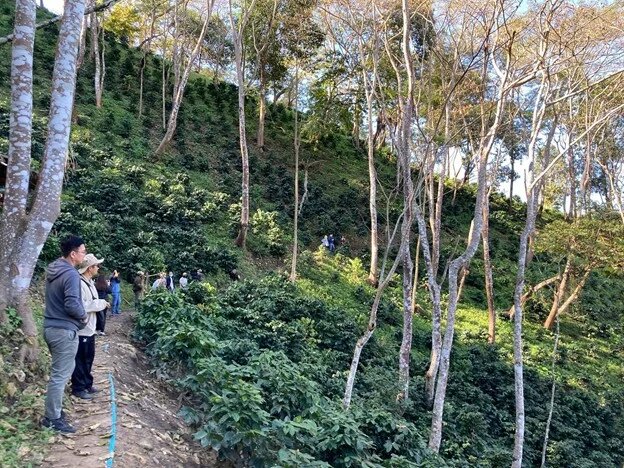
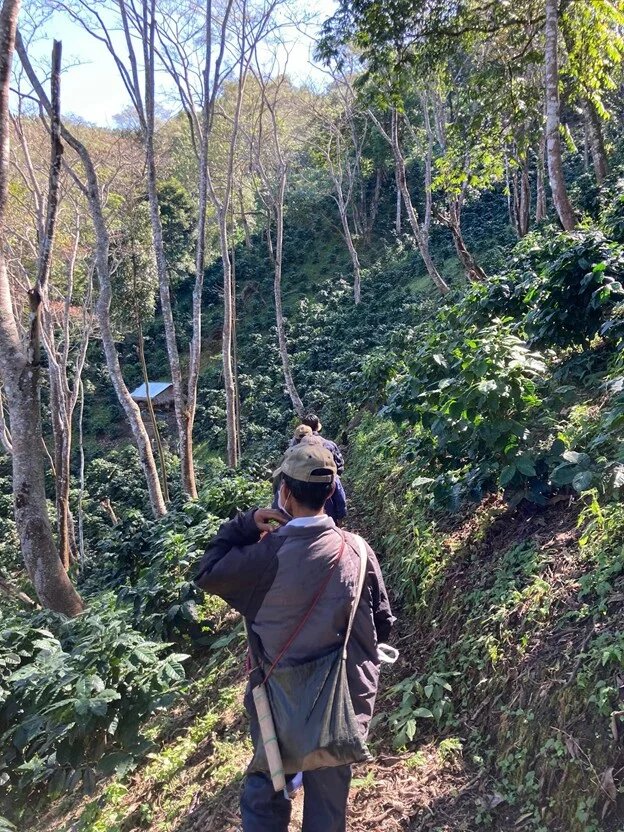
While many coffee-growing areas such as Indonesia, Vietnam, and the Philippines struggled, some regions in northern Thailand were not as severely affected. Shade-grown coffee trees are not particularly affected. Many of these shade-grown coffee farms are more than 30 years old. Some even date back over 50 years to the early Royal Project period. Coffee trees grown under the shade requires less fertilizers or herbicides and are also resistant to pests and diseases. The shades create micro-climate, thus, helps regulate the environment – soil, moisture, and reducing the direct sunlight.
In coffee-growing regions in northern Thailand, such as Chiang Rai and Chiang Mai, local people and hill tribes grew wild tea trees to make fermented tea leaves known as “miang,” a traditional northern product. Miang is known for its phenolic compounds and anti-microbial properties. Coffee seedlings were planted among these tea trees. When coffee prices were good, farmers harvested and sold the beans. When prices were low, they focused on collecting tea leaves instead. This mixed system became part of the local culture and way of life.
Over the past decade, national coffee competitions have increasingly served as key platforms for identifying and promoting high-quality coffee. Farmers who produce premium-grade beans frequently see their products auctioned at elevated prices, which has encouraged broader attention toward quality improvement and sustainable cultivation practices. As a result, the reputation of Thai coffee has grown steadily in both domestic and international markets. International panels have also recognized Thailand’s hybrid Arabica cultivars—developed by national research institutions—for their notable sensory performance and quality comparable to coffees from established producing countries.
Coffee Processing: a Significant Change
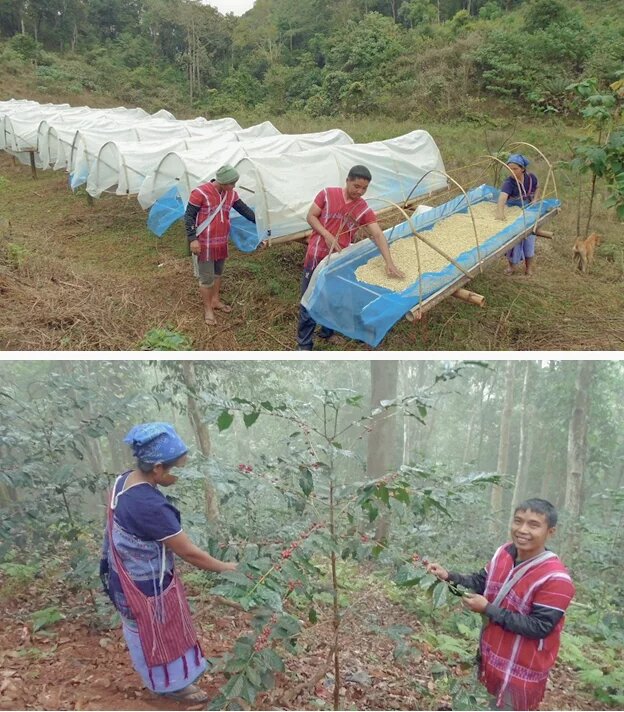
In 2016, a significant shift occurred in the field of coffee processing. Following improvements in farm management and raw material quality, the post-harvest and processing stages began integrating scientific approaches to fermentation management in a more systematic manner. This transition challenged the long-held assumption that hybrid cultivars such as Catimor could not reach specialty-grade potential. Consequently, Thailand’s advancement in post-harvest science gained broader recognition within the global coffee community.
A milestone in modern processing emerged in 2015, when Australian barista Sasa Sestic won the World Barista Championship and introduced the application of Carbonic Maceration (CM) to coffee processing. Drawing parallels to winemaking techniques, this method utilizes stainless-steel containers rather than concrete tanks and enables producers to modulate or develop a wide range of flavor attributes, including fruity, floral, and citric characteristics. This approach subsequently motivated processors around the world—including those in Thailand—to explore innovative and scientifically refined fermentation methods aimed at enhancing coffee quality and improving processing consistency.
Thailand’s Breakthroughs in Coffee Cultivars
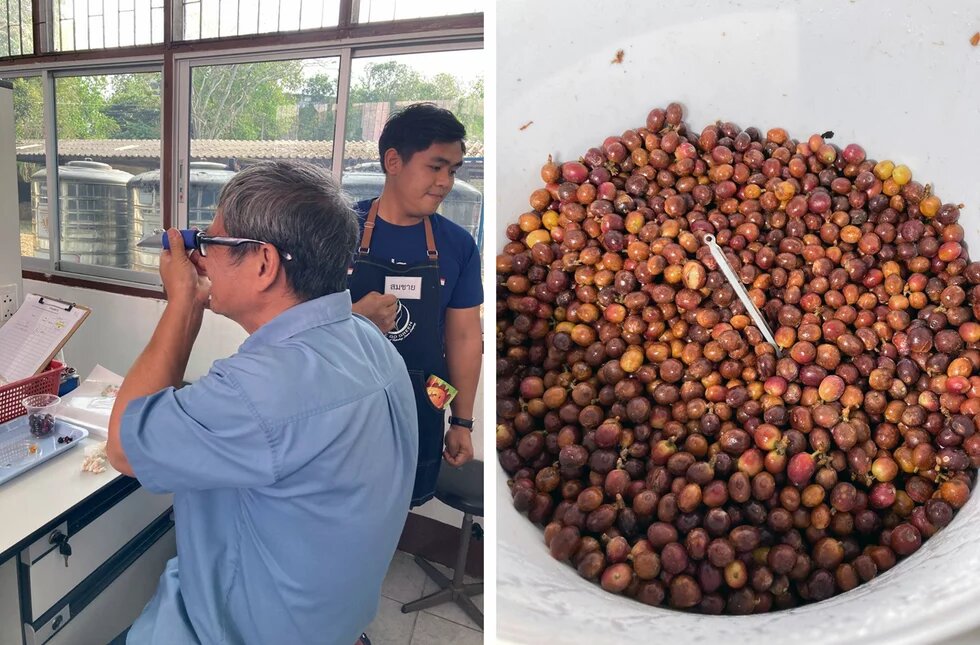
Thai coffee growers, together with research groups from several academic institutions, collaborated to investigate and develop multiple new fermentation methodologies. The Arabica Research Team at Rajamangala University of Technology Lanna, led by Assoc. Prof. Dr. Wanphen Jitjaroen, successfully established four innovative processing techniques: Semi-Carbonic Maceration Process (SCM), Yeast Process, Coffivino Process, and Brixter Process.
These innovations have collectively received 13 international awards in innovation and invention across countries such as Romania, Poland, Canada, the United States, Russia, and South Korea, and have been featured in international academic publications.
The newly developed techniques not only generate distinct sensory profiles characteristic of each method, but also enhance the expression of varieties with previously subtle or indistinct attributes. Moreover, they improve the quality of coffee cherries affected by geographical limitations or inconsistent harvesting conditions, enabling these cherries to be transformed into beans with balanced and consistent flavor characteristics. This development represents an important advancement for Thailand’s coffee sector, strengthening the ability of farmers and processors to produce specialty coffees that reflect unique Thai identities recognized at the global level.
In addition, academic seminars and training programs have been organized to disseminate these scientific approaches to growers, processors, and coffee enthusiasts. As these methods are more widely adopted, the overall quality of Thai coffee—including hybrid varieties such as Catimor—has improved significantly, contributing to increased recognition and demonstrating measurable progress within Thailand’s coffee production and processing landscape.
Advancements in Coffee Drying
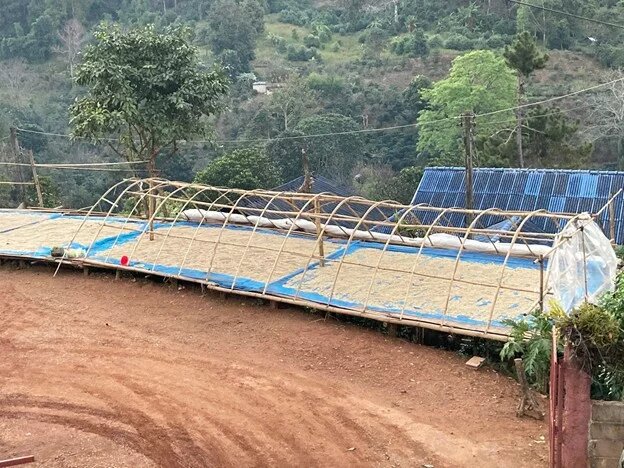
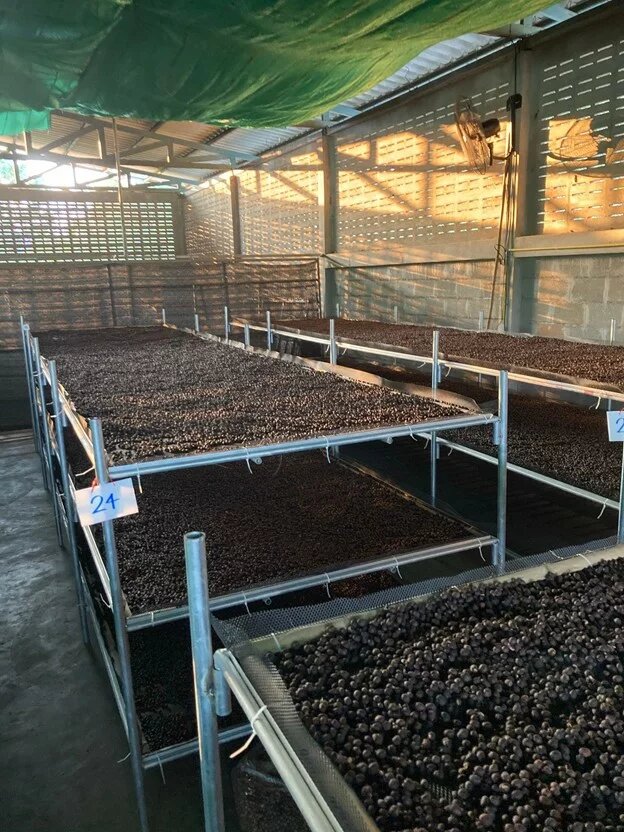
Thailand has also developed high-efficiency coffee drying processes to control contamination risks and preserve the consistency of flavors produced by microbial activity. During research on coffee fermentation, it was discovered that precise drying control can significantly enhance coffee flavor.
This led to the adaptation of an energy engineering-based drying system called LTLH (Low Temperature, Low Humidity) into coffee processing by the private sector, spearheaded by Arkhom Suvannakita and Thumavadee Suvannakita from Preda Roasting House in Lampang, together with the author.
In late 2018, they collaborated to develop suitable drying methods in response to unpredictable weather and heavy rainfall during harvest seasons that caused substantial crop losses. The LTLH drying system was first used that year, and coffee from Chatree Saeyang, a farmer who used the LTLH facility in Chiang Mai to protect his beans from rain, went on to win first and third place in the 2019 Thai Specialty Coffee Awards.
Following this success, knowledge exchange among farmers grew rapidly. Since then training for farmers across Thailand to minimize losses and enhance coffee quality—ensuring that the world recognizes the excellence of Thai coffee.
Innovative Coffee Fermentation Techniques Developed in Thailand
The following processes in coffee fermentation techniques in Thailand are the following:
- Yeast Process – Controlled yeast fermentation for cleaner, more complex flavors
- Semi-Carbonic Maceration – Inspired by red wine fermentation to enhance aroma and structure
- Coffivino Process – A wine-inspired fermentation method that unlocks unique flavors
- Brixter Process – Uses sugar content (Brix) to regulate fermentation for consistency
Farmers Who Won Awards[1]
2019 – Thai Specialty Coffee Awards: Rank 1, 4
2020 – Thai Specialty Coffee Awards: Rank 5 (Honey)
2021 – Thai Specialty Coffee Awards: Rank 6 (Honey)
2021 – Thai Coffee Excellence: Rank 7 (Honey)
2022 – Thai Specialty Coffee Awards: Rank 9 (Natural), Rank 4 (Washed)
2022 – Thai Coffee Excellence: Rank 2 (Natural), Rank 5 (Honey)
2022 – COE Best of Thailand Pilot Program: Rank 2
2023 – COE Best of Thailand: Rank 15 (Natural)
2024 – COE Best of Thailand: Rank 3 (Natural)
The Demand for Organic Coffee
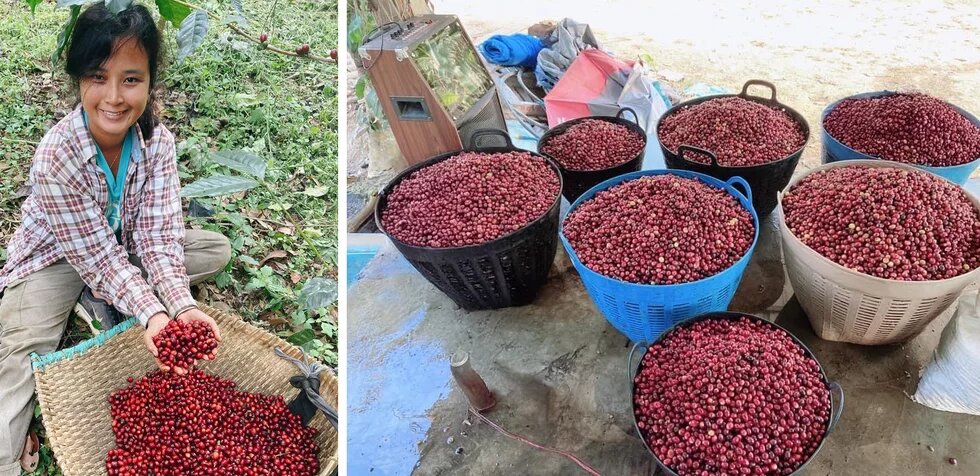
The private sector has also begun to recognize the value of certified organic coffee. According to the National Organic Program, the coffees harvested in the land must have no prohibited substances applied to it for at least three years; the soil fertility and crop nutrients will be managed through tillage and cultivation practices, crop rotations, and cover crops, supplemented with animal and crop waste materials and allowed synthetic materials.; the pests, weeds, and diseases will be controlled primarily through management practices including physical, mechanical, and biological controls; must use organic seeds and other planting stock when available and the use of genetic engineering, ionizing radiation and sewage sludge is prohibited. In Thailand, the organic farming was launched in 2011 in Chiangmai, and later expanded to Chiang Rai, Mae Hong Son, Lampang, and Tak.
Even though organic coffee is more expensive, many major companies have adopted policies to use it in their products. This trend has raised awareness of the benefits of chemical-free and shade-grown coffee. It has also created stronger incentives for farmers to adopt sustainable methods. As a result, both coffee quality and forest health have improved. Highland communities can continue to live harmoniously with the forest while earning a stable income.
The percentage of the shade-grown coffee has no available data. It is believed to be a small part of Thailand’s total coffee production, yet, it carries an important message. By choosing to drink coffee grown under forest shade without chemicals, we not only support farmers but also help protect Thailand’s watershed forests. Our simple act of consuming responsibly produced coffee contributes to a healthier environment and a better future for everyone.
___
Kamolwat Toboonchuay, known as Ton, is a prominent coffee professional in Thailand with deep expertise in coffee and beverage training, development, and judging. He serves as the Coffee & Beverage Development Manager at Boncafe (Thailand), where he leads training programs, curriculum design, and professional skill development for baristas and café operators across the country.
Disclaimer: This published work was prepared with the support of the Heinrich Böll Stiftung. The views and analysis contained in the work are those of the author and do not necessarily represent the views of the foundation. The author is responsible for any liability claims against copyright breaches of graphics, photograph, images, audio, and text used.
[1]The author was the consultant of the coffee farmers who won awards since 2019.
References
Alemu, Molla Mekonnen. “Effect of Tree Shade on Coffee Crop Production.” Journal of Sustainable Development 8, no. 9: 66. 2015. https://doi.org/10.5539/jsd.v8n9p66
Azavedo, Mark. “Arabica Coffee Bean Growing in the Chiang Rai and Chiang Mai Areas of Northern Thailand and How to Make the Farming More Sustainable”. British Journal of Environmental Studies 4 (2): 09-19. 2024. https://al-kindipublishers.org/index.php/bjes/article/view/8164/6902
Azmi, N., Yusya Abubakar, H.P. Widayat, Cut Nilda, M. Yunika, S. Andini, F. Rahmi, and M. Muzaifa. “What is Carbonic Maceration Coffee? A Mini Review on Production and Quality.” IOP Conference Series: Earth and Environmental Science 1356, no. 1 (2024): 012007. https://doi.org/10.1088/1755-1315/1356/1/012007.
Chaiyapa, Warathida. A 2030 Roadmap for Climate Adaptation in the Coffee Bean Belt of Southeast Asia. Heinrich-Böll-Stiftung Southeast Asia Regional Office, 11 September 2023. https://th.boell.org/sites/default/files/2023-09/warathida-2030-roadmap-coffee-climate-change.pdf.
Chaovanapoonphol, Yaovarate, Jittima Singvejsakul, and Aree Wiboonpongse. "Analysis of Exogenous Factors to Thailand Coffee Price Volatility: Using Multiple Exogenous Bayesian GARCH-X Model" Agriculture 13, no. 10: 1973. 2023. https://doi.org/10.3390/agriculture13101973
Chartchai Khanongnuch, Kridsada Unban, Apinun Kanpiengjai, Chalermpong Saenjum. “Recent research advances and ethno-botanical history of miang, a traditional fermented tea (Camellia sinensis var. assamica) of northern Thailand.” Journal of Ethnic Foods, Volume 4, Issue 3, 2017. https://doi.org/10.1016/j.jef.2017.08.006
Diskul, M. L. Dispanadda, Ramrada Ninnad, Andrea Skinner, and Visit-Orn Rajatanarvin. “Development Not Drug Control: The Evolution of Counter Narcotic Efforts in Thailand.” Journal of Illicit Economies and Development 1(1):80-88, 2019. https://doi.org/10.31389/jied.16.
Do, Thang Nam. “Climate Change Leaving a Bitter Taste in World’s Coffee Supply.” East Asia Forum, September 26, 2024. https://eastasiaforum.org/2024/09/26/climate-change-leaving-a-bitter-taste-in-worlds-coffee-supply/.
Guha, Pujita. “Shade and the Capture of Light.” Cultural Politics 19, no. 3 (November): 374-91. 2023. https://doi.org/10.1215/17432197-10819465
Jitjaroen, Wanphen. “Coffivino Process: A New Era of Coffee Fermentation.” Journal of Science and Agricultural Technology 2, no. 2 (2021): 1-5. https://doi.org/10.14456/jsat.2021.
Jongwutiwes, Paninee. “A Case Study of Pana Coffee Company Limited on Coffee Production Analysis.” Chulalongkorn University Theses and Dissertations (Chula ETD), 2020. https://digital.car.chula.ac.th/chulaetd/7153
Karnjanatawe, Karnjana. “Escape to the Highland.” https://www.Bangkokpost.com, February 2, 2012. https://www.bangkokpost.com/life/travel/277921/escape-to-the-highland.
Khemarat Talerngsri-Teerasuwannajak and Sittidaj Pongkijvorasin, “Transition from Upland Maize Farming to Sustainable Agriculture in Thailand,” FFTC Agricultural Policy Platform (FFTC-AP), November 13, 2018.https://ap.fftc.org.tw/article/1354
Kiup, Emma, Swan, Tom and Field, Damien. “Soil Management Practices in Coffee Farming Systems in the Asia-Pacific Region and Their Relevance to Papua New Guinea,” Soil Use and Management 41, no. 7 (2025): 68-[page range], https://doi.org/10.1111/sum.70068
Noppakoonwong, Uthai, Chatnapa Khomarwut, M. Hanthewee, S. Jarintorn, S. Hassarungsee, S. Meesook, C. Daoruang, P. Naka, S. Lertwatanakiat, K. Satayawut, A. P. Pereira, S. M. C. Silva, and V. M. P. Várzea. “Research and Development of Arabica Coffee in Thailand.” Paper presented at the 25th International Conference on Coffee Science (ASIC), April 2015.
Onishi, Yuka, Piyawan Suttiprapan, Jiraporn Kulsarin, Weeyawat Jaitrong, and Fuminori Ito. “Behavioral Interactions Between Coffee Berry Borers and Ants in Chiang Mai, Thailand.” Journal of Agriculture, Faculty of Agriculture, Chiang Mai University 33, no. 1 (January–April 2017): 1–8. https://li01.tci-thaijo.org/index.php/joacmu/article/view/246042.
Sie, Melody, "Risk perceptions of coffee growers in northern Thailand: a case study of Chiang Rai province”. Chulalongkorn University Theses and Dissertations (Chula ETD).2024. 12525. https://digital.car.chula.ac.th/chulaetd/12525

